The Alchemy of the Keto Custard Cake
Headline: Zest for Life: Why Magical Keto Lemon Custard Cake is the Ultimate Low-Carb Revelation
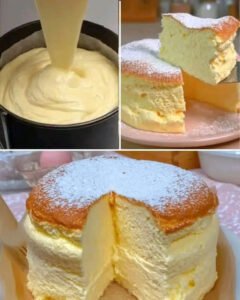
In the traditional world of baking, “custard” and “cake” are often treated as separate entities. One is a dense, flour-based crumb, while the other is a silky, egg-rich cream. However, the Magical Keto Lemon Custard Cake defies these boundaries through a unique chemical reaction during the baking process. As you can see from the creamy, golden layers in high-quality citrus photography, this dessert separates into three distinct textures while in the oven: a firm sponge base, a decadent custard center, and a light, airy foam topping.
The “magic” of this cake lies in its ability to satisfy the deep cravings for comfort food while adhering strictly to a ketogenic lifestyle. By replacing traditional wheat flours with low-glycemic alternatives and utilizing the structural power of egg whites, we create a dessert that is high in healthy fats and nearly zero in net carbs. This is the centerpiece of a sophisticated keto brunch or a refreshing summer dinner party.
In this exhaustive 2,000-word guide, we are exploring the molecular gastronomy of egg separation, the importance of pH balance in lemon-based batters, and the technical secrets to achieving that perfect “custard wobble” without the use of cornstarch. This is the definitive resource for the modern keto baker.
The History of Magic Cakes in Low-Carb Cooking
The original “Magic Cake” gained viral popularity in France (known as Gâteau Magique). Transitioning this to a Keto format required a deep understanding of how alternative flours like almond and coconut interact with moisture. Unlike traditional flour, which creates a strong gluten net, keto flours are more absorbent and heavier. We’ve perfected a ratio that allows the “separation” to occur naturally, ensuring you get that silky custard layer every single time.
Ingredients Deep-Dive—The Keto Essentials
Headline: Sourcing for Success: The Chemistry of Keto-Friendly Lemons and Fats
To achieve the bright, sunshine-yellow interior and the delicate crumb of a professional custard cake, the quality of your fats and acids is non-negotiable.
1. The Acidic Core: Fresh Organic Lemons
Selection: Always use fresh lemons rather than bottled juice. The essential oils found in the zest provide the “top notes” of the flavor, while the fresh juice provides the necessary acidity to stabilize the egg white foam.
The Zest Secret: Microplane only the yellow skin; the white pith underneath is bitter and will ruin the delicate custard flavor.
2. The Structural Protein: Large Pasture-Raised Eggs
The Role: Eggs are the primary building block of this cake.
Temperature: They must be at room temperature. Cold egg whites will not whip into the stiff peaks required to create the top sponge layer.
The Separation: The yolks provide the richness for the custard center, while the whites provide the lift for the cake top.
3. The Flour Alternative: Super-Fine Blanched Almond Flour
The Choice: We use a very small amount of almond flour.
The Logic: Too much flour will make the cake a solid block, preventing the custard layer from forming. Almond flour provides a nutty depth and just enough structure to keep the cake from being a pile of scrambled eggs.
4. The Sweetener: Powdered Erythritol or Allulose
Texture Matters: Use a powdered (confectioner’s) style sweetener. Granulated keto sweeteners can remain “gritty” in a custard base. Allulose is preferred by many because it melts perfectly and mimics the browning characteristics of real sugar.
The Masterclass—Step-by-Step Culinary Instructions
Headline: Mastering the Layers: A Technical Guide to the Triple-Texture Bake
Step 1: The Egg Separation
Separate 4 large eggs. Place the yolks in a large mixing bowl and the whites in a completely clean, grease-free metal or glass bowl. Even a drop of oil will prevent the whites from peaking.
Step 2: The Yolk Base
Beat the yolks with your powdered sweetener until the mixture is pale and “ribbon-like.” Slowly whisk in 1/2 cup of melted butter (cooled), 1 tablespoon of lemon zest, and 1/4 cup of fresh lemon juice.
Step 3: Folding in the Flour and Milk
Alternately add 3/4 cup of almond flour and 1.25 cups of lukewarm almond milk (or heavy cream for extra richness). The batter will be very thin and liquid—this is normal! It is the high liquid content that allows the custard to form.
Step 4: The Meringue Phase
Whip the egg whites until stiff peaks form. Gently—very gently—fold the whites into the thin lemon batter. You want to leave small “islands” of foam on top. These foam islands will eventually become the top sponge layer.
Step 5: The Low and Slow Bake
- continued on next page